
You need a sensor housing factory that can hit tight tolerances, provide material traceability, and scale from prototype to bulk production without jumping between suppliers. Sourcing enclosures for delicate electronics is rarely as simple as buying off the shelf. The enclosure dictates the sensor's thermal response time, its pressure rating, and its survival in corrosive environments.
DS Industrial (Shenzhen) Co., Ltd. manufactures custom and wholesale sensor enclosures for temperature, pressure, force, gas, and flow applications. We operate as a direct custom sensor enclosure manufacturer, managing the entire production lifecycle in-house. By utilizing CNC machining, investment casting, die casting, and sheet metal fabrication, we produce components that meet exact client specifications. This page outlines how we engineer, manufacture, and inspect these critical components for international B2B buyers.
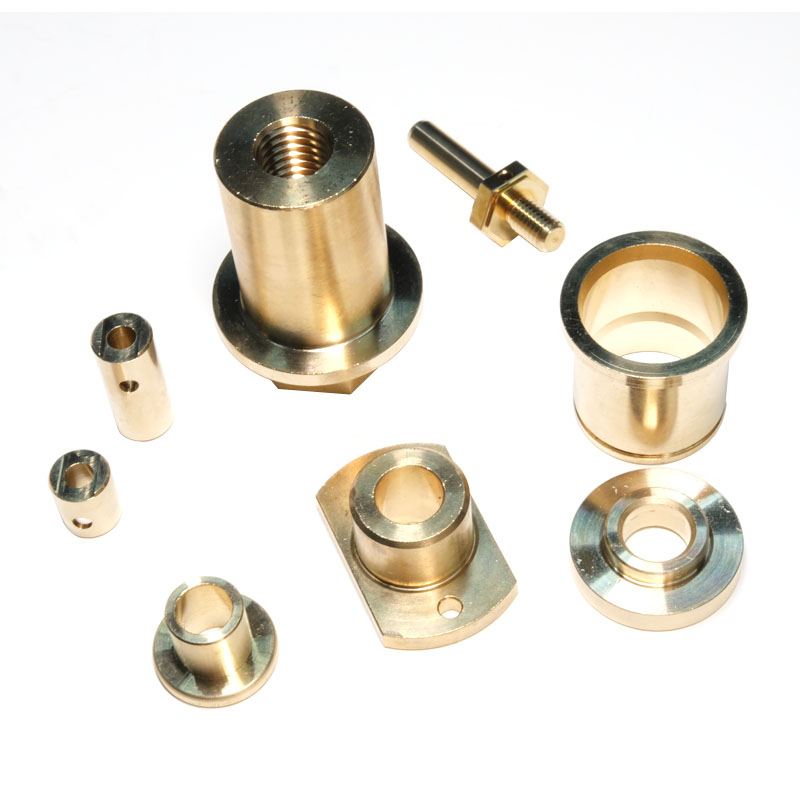
Buying bulk sensor housing from China often means navigating a maze of trading companies and brokers. These middlemen add margin, but worse, they strip away your technical control. When an O-ring groove is machined out of tolerance or a material certification is missing, the broker blames the factory, and the factory blames the translated drawing. Weeks are lost.
Direct procurement solves this. DS operates as the actual manufacturer. When you submit a CAD file to us, you are communicating with the facility that will cut the metal. We maintain ISO 9001:2015 certified production, ensuring every batch follows documented standard operating procedures from raw material intake to final shipping.
Because we control the floor, we offer factory discount prices without sacrificing the engineering oversight required for high-stakes industrial components. You receive comprehensive quality documentation, including First Article Inspection (FAI) reports and CMM data, proving that the parts matching your purchase order are exactly what arrives on your dock.
No single manufacturing process fits every sensor type. A disposable HVAC temperature probe requires a completely different production strategy than a subsea pressure transmitter. We divide our production floor by capability, allowing us to match the manufacturing method to your volume, geometry, and material requirements.
Subtractive manufacturing remains the standard for high-precision, custom metal sensor housing fabrication. CNC turning and milling allow us to hold tolerances as tight as ±0.005 mm. This precision is non-negotiable for specific features.
Consider the threads on a high-pressure sensor. If the pitch diameter is slightly undersized, the sensor will vibrate loose under industrial machinery loads. If the O-ring gland has microscopic chatter marks from a dull endmill, fluid will bypass the seal at high pressures. As a dedicated CNC machined sensor housing supplier, we program our toolpaths to ensure critical sealing surfaces achieve the exact Ra surface finish required by your design.
CNC machining excels in low-to-medium volume orders or high-mix production where tooling costs for casting would be prohibitive. It is also the only viable method when the enclosure must be produced from a solid billet of specialty alloy to guarantee zero porosity—a strict requirement for high-vacuum or extreme-pressure applications.
When order volumes scale into the tens of thousands, machining every part from solid bar stock wastes time and material. Tooling-based manufacturing drastically reduces the per-unit cost for wholesale orders.
We use die casting primarily for aluminum and zinc alloys. Die cast aluminum sensor enclosures are lightweight, offer excellent natural RF shielding for internal electronics, and dissipate heat rapidly. The trade-off is the initial tooling investment and the risk of internal porosity. We mitigate porosity through strict thermal control of the dies and vacuum-assisted casting techniques, ensuring the thin walls of your enclosure remain structurally sound.
For ferrous metals, we utilize investment casting (lost wax casting). This process allows us to cast complex internal geometries in stainless steel that would be impossible to machine with a standard 3-axis mill. While investment casting produces a near-net shape, we routinely follow up with secondary CNC machining to hit the tight tolerances required for threads, mating surfaces, and sensor element seating areas.
The operating environment dictates the material. Specifying the wrong alloy leads to galvanic corrosion, mechanical failure, or sluggish sensor response times. We stock and machine a specific range of metals tailored to industrial sensor deployment.
Pressure and temperature transmitters rely heavily on austenitic stainless steels, specifically 304 and 316L.
A stainless steel pressure sensor enclosure must withstand continuous mechanical stress without fatiguing. 316L stainless steel contains molybdenum, giving it superior resistance to pitting and crevice corrosion in chloride environments. If your sensor will be deployed in marine applications, chemical processing, or food-grade washdown zones, 316L is the mandatory baseline.
For a wholesale temperature sensor housing, the engineering challenge is thermal mass. The wall of the probe must be thick enough to withstand external pressure and physical impact, but thin enough to allow rapid thermal transfer to the internal thermistor or RTD. A thick wall creates thermal lag; the sensor will report a temperature change seconds after the process fluid has already spiked. We work with buyers to machine probe tips with ultra-thin walls, balancing structural integrity with thermal responsiveness.
Achieving an IP68 rating—meaning the enclosure is dust-tight and protected against continuous submersion—requires more than just slapping a rubber gasket between two pieces of metal. The housing design must actively compress the seal to a specific percentage.
An IP68 waterproof sensor enclosure factory must control the dimensional accuracy of the mating halves. If the gap between the lid and the base varies by a few thousandths of an inch across the span of the enclosure, the O-ring will experience uneven compression. Water will eventually find the low-pressure point. We machine rigid, flat mating surfaces and tight-tolerance glands to ensure uniform seal compression.
For an industrial gas sensor housing factory order, the requirements often extend beyond waterproofing into explosion-proof (Ex d) territory. These enclosures must be designed to contain an internal explosion without igniting the flammable gases in the external environment. This requires precisely machined flame paths—specifically engineered gaps and thread engagements that cool escaping gases below their ignition temperature. We manufacture these housings to strict dimensional standards, ensuring compliance with international hazardous area certifications.
A sensor enclosure is only as good as the inspection data proving its accuracy. Relying solely on manual caliper checks is insufficient for modern OEM flow sensor enclosure manufacturing. The geometries are too complex, and the cost of failure in the field is too high.
We prevent defects through a combination of automated optical inspection and Coordinate Measuring Machine (CMM) integration. Optical systems quickly scan batches of parts to verify presence, position, and surface defects, catching tool wear before it results in a rejected batch.
For critical dimensions, we rely on CMMs. A CMM uses a ruby-tipped probe to map the physical geometry of the machined part in three-dimensional space. This allows us to measure geometric dimensioning and tolerancing (GD&T) callouts that manual tools cannot accurately verify, such as true position, cylindricity, and concentricity. If the internal bore of a force sensor housing is not perfectly concentric with the outer mounting threads, the sensor element will experience side-loading, resulting in skewed data. CMM reports provide the mathematical proof that your enclosures are perfectly aligned.
Moving from a concept to bulk wholesale sensor housing and enclosure delivery requires a structured procurement process. Vague requests lead to inaccurate pricing and mismatched expectations.
To secure accurate factory discount prices and initiate production, your Request for Quote (RFQ) should include:
Once we review your RFQ, we provide Design for Manufacturability (DFM) feedback, flagging any features that add unnecessary cost. We then proceed to First Article Inspection. You receive a small batch of parts complete with full dimensional reports. Mass production only begins after you approve the FAI, ensuring the wholesale delivery matches your engineering requirements exactly. Welcome to wholesale or customized production from the DS factory at any time.
Most of our quotes are delivered within 24/36 hrs. and usually in much less time, depending on project details.
Our team will contact you directly about your CNC machining quote to ensure you’ve received and understand all aspects of your quotation and to answer any questions you may have about your options.