
A custom manifold and valve should be specified around the actual flow path, pressure conditions, media, interfaces, and inspection requirements—not selected from a generic port layout. DS manufactures custom and bulk components in China for OEM and industrial buyers, using CNC machining, casting, sheet metal fabrication, mold making, and finishing processes.
Short answer: Send DS a drawing or marked-up sketch showing ports, threads, material, valve function, operating conditions, and critical tolerances. DS can review the manufacturing route, prepare a quotation—most projects are quoted within 24 hours—and discuss inspection records and low-volume shipment options for U.S. customers.
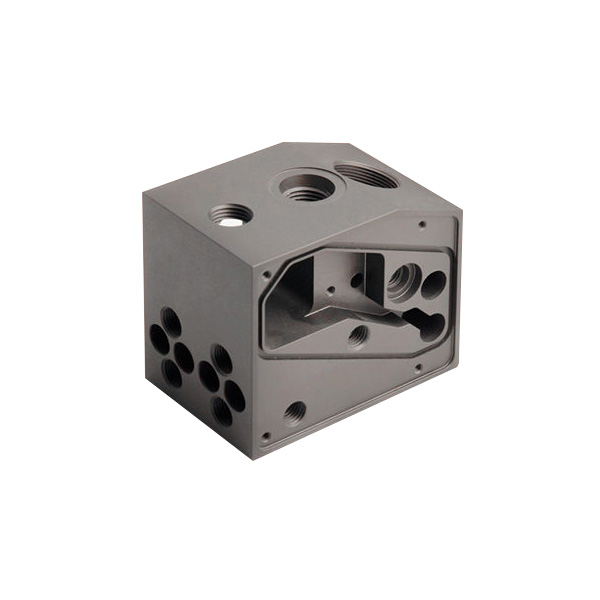
A Drawing-Based Solution for Custom Manifold and Valve Components
The drawing is the starting point, but it is not the whole specification. A usable RFQ also explains what each port does, which passages must remain open, where the valve sits in the circuit, and which surfaces mate with other equipment. Those details determine whether a part is straightforward to machine or needs a different process and inspection plan.
DS supplies custom manifold and valve components for bulk production as well as development and replacement requirements. If your design is still changing, a clear 2D drawing, 3D model, or annotated sample can give the factory enough context to identify missing decisions before production begins.
Start With the Flow Path, Application, and Operating Conditions
Hydraulic, pneumatic, process-control, and equipment-builder applications require different port layouts and flow-path decisions
A hydraulic manifold block may need short, direct passages and carefully controlled intersections to limit restriction. A pneumatic manifold often depends on compact port spacing, clean internal passages, and easy service access. Process-control equipment may place greater emphasis on media compatibility, corrosion resistance, and valve access. An equipment builder may care most about mounting envelope, repeatable interfaces, and replacement compatibility.
These are not interchangeable design priorities. A port layout that works for a compact air circuit may create unnecessary turns or difficult tooling in a high-pressure hydraulic block. Tell DS how the component will be installed and serviced, not only its outside dimensions.
Define working pressure, temperature, media compatibility, valve function, and the consequences of leakage or restriction
State the working pressure and temperature range, the fluid or gas, the valve's function, and the cost of a leak or pressure drop. Identify whether the valve is intended for isolation, switching, metering, check flow, or another purpose. The required seal material and surface finish can change with the media and temperature.
Do not treat “high pressure” as a complete specification. The operating range, pressure peaks, duty cycle, and applicable safety requirements belong in the RFQ. If DS is expected to perform a pressure test or provide a particular test record, define that requirement before quotation; it should not be assumed from the product name alone.
Specify Ports, Threads, Materials, Seals, and Critical Interfaces
Include port count, location, thread standard, connection type, sealing interface, material grade, and corrosion requirements
Thread ambiguity is one of the most expensive small mistakes in a manifold project. Identify the thread standard and size for every port, along with the connection type and sealing method. NPT, BSP, metric, and other thread systems are not interchangeable simply because their nominal sizes look similar. Show port locations from a defined datum and mark any orientation requirement.
List the material grade rather than writing only “steel” or “aluminum.” Stainless steel, aluminum, and other alloys present different machining, corrosion, weight, and finishing considerations. Note whether the part will see moisture, chemicals, outdoor exposure, washdown, or galvanic contact with another material.
Call out O-ring grooves, gasket faces, valve seats, mounting holes, datum surfaces, and any dimension that controls fit or sealing. A general dimensional tolerance does not adequately describe a critical sealing interface. If seals are supplied by DS, identify the compound and temperature or media requirements; if they are supplied by you, provide the exact part reference.
Select CNC Machining or Casting for the Required Geometry and Quantity
CNC turning and milling support precise prototypes, replacement parts, and lower-volume custom manifold blocks
CNC turning and milling let DS produce custom manifold blocks, valve bodies, threaded features, mounting faces, and related components directly from the design. This route is often sensible for prototypes, design revisions, replacement parts, and lower-volume orders because it avoids committing early to production tooling.
For larger quantities or geometry suited to a near-net shape, DS also offers die casting and investment casting, followed by machining where the interfaces require it. Casting can reduce material removal, but it brings its own decisions around draft, wall thickness, parting lines, porosity risk, and secondary operations. The cheapest process per part is not always the lowest project cost if it creates difficult sealing faces or forces extensive finishing.
Ask for a manufacturing review before freezing the design. A small change to tool access, hole depth, corner geometry, or datum strategy may reduce machining difficulty without changing the flow function.
Use Inspection Records to Confirm Fit, Pressure-Related Features, and Material Traceability
Inspection should follow the features that can stop the assembly from working. That usually includes port position, thread form, mounting-hole location, sealing grooves, valve interfaces, passage-related dimensions, and critical external datums. The inspection plan should identify what is measured, against which drawing revision, and with what acceptance criteria.
DS states that its quality system is ISO 9001:2015 compliant and lists CMM and other inspection equipment. Buyers can request dimensional inspection records and First Article Inspection documentation when the project requires documented approval of the first production part. For material control, specify whether you need a material certificate or test report and what traceability information must appear on it.
These records do not replace a complete design responsibility review. They do create a clearer record of whether the delivered component matches the approved drawing, material requirement, and inspection plan. If pressure testing, cleanliness validation, or special coating verification is required, put it in the purchase documentation rather than leaving it as an informal expectation.
Send a Complete RFQ Package for a Faster U.S. Delivery Decision
A useful RFQ package lets DS price the part and identify risk without a long sequence of basic clarification emails. Include:
- 2D drawing with revision, datums, tolerances, surface finishes, and critical characteristics.
- 3D CAD model in the preferred file format, if available.
- Annual volume, first order quantity, prototype quantity, and target production timing.
- Material grade, heat treatment or finish, seal requirements, and corrosion exposure.
- Port standards, valve function, operating pressure and temperature, and media.
- Inspection documents, First Article Inspection needs, material certificates, and any test requirements.
- Packaging, labeling, destination, and whether partial or low-volume shipment is needed.
For U.S. buyers, DS says it uses FedEx for low-volume shipments. Freight timing still depends on order quantity, production route, approval cycles, and the completeness of the drawing package, so request a delivery estimate against a defined scope.
To discuss a custom valve manifold, hydraulic manifold block, pneumatic manifold, or related OEM component, send the drawing and operating details through the custom manifold valve supplier page. DS can then assess the process, inspection documentation, quantity, and delivery requirements together rather than pricing an incomplete part.